
Equipment record

HPE Aruba Networking Private 5G Core

Core from HPE (Athonet); details below are as stated by the manufacturer.

Reviewed Sep 30, 20264 sourced facts
Work at HPE (Athonet)? Suggest a correction
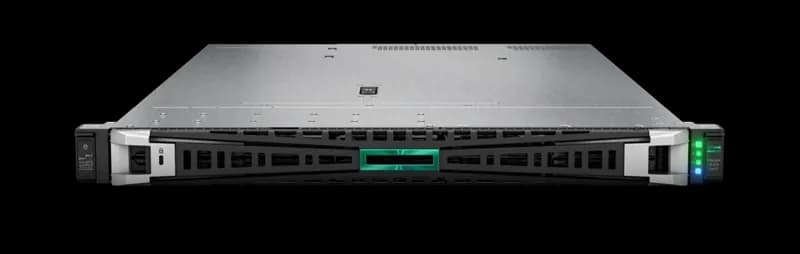
HPE ProLiant DL325 Gen11 server, the hardware HPE's M2000 Private 5G core appliance is built on
Image: HPE

Details

Exact model
HPE Aruba Networking Private 5G Core
Category
Core
Technology / network scope
4G LTE5G NR4G EPC and 5G core in one software product
Availability
Through the vendor · From HPE or authorized HPE partners
Not stated by sources
Bands · Environment

Work at HPE (Athonet)?

Send a correction for this product. Official photos and datasheets are welcome by email. Use your company email and confirm it, and you’re reviewed first.

Suggest a correction

Anyone can send a correction; we check each one against its sources.

Overview

HPE Aruba Networking Private 5G Core is Hewlett Packard Enterprise's mobile core for private networks: one software product that provides both a 4G EPC (Evolved Packet Core) and a 5G core.[1] It is built on technology from Athonet, which HPE acquired in 2023, and HPE says the core can be bought as part of its integrated private 5G system or on its own for use with any 3GPP-standard radio.[2][3] HPE delivers it as software only for compliant hardware or preinstalled on HPE servers; in HPE's turnkey system it ships on the M2000 core appliance, an HPE ProLiant DL325 Gen11 server.[1][4]

Specifications

Architecture

Core type
Combined 5G core (5GC) and 4G EPC in one software appliance, following 3GPP TS 23.501 and TS 23.401; HPE's turnkey documentation says organizations can start on 4G and move to 5G without changing the software version or hardware.[1][4]
4G functions
MME (mobility management entity), serving and packet data network gateways (SGW, PGW), HSS (home subscriber server), PCRF (policy and charging rules function), equipment identity register, SMS center, and broadcast-multicast service center and gateway.[1]
5G functions
AMF (access and mobility management), SMF (session management), AUSF (authentication server), UDM and UDR (subscriber data management and repository), UPF (user plane function), PCF (policy control), NRF (network repository), CHF (charging) and 5G equipment identity register.[1]
Built-in network services
DNS server, Diameter routing agent, SFTP server and VPN client, plus routing and traffic-separation utilities.[1]
Voice and slicing
Network slicing and voice over 5G (VoNR) with the HPE Aruba Networking Private 5G Voice Service, an IMS (IP Multimedia Subsystem) add-on.[1]
Wi-Fi integration
Devices can authenticate on Wi-Fi with their cellular credentials, through a RADIUS interface to Wi-Fi access points.[1]

Deployment options

Platforms
Runs as one or more Linux virtual appliances in VMs, with VMware and Proxmox as the recommended hypervisors; each instance is a hardened Linux OS (derived from the Yocto project) running one container per functional component.[1]
Delivery
Software only on compliant hardware, or preinstalled on HPE hardware; HPE says customers can use qualifying HPE servers they already own or buy new ones.[1]
Turnkey appliance
HPE's M2000 core appliance is an HPE ProLiant DL325 Gen11 preloaded with the core as virtual machines (control plane, user plane and an operations VM that connects to HPE's cloud dashboard). HPE's documentation lists an AMD EPYC 9224 24-core processor, 64 GB of memory, two 960 GB SSDs in RAID 1, four 10 GbE SFP+ ports and redundant power supplies.[4]
Scaling and redundancy
Control plane and user plane scale independently; licenses cover no redundancy, local high availability or geo-redundancy, and Node Extension licenses add user-plane nodes.[1] HPE's qualified hardware configurations are built with redundant servers, switches and connectivity.[1]

Capacity (as stated by HPE)

User plane throughput
Reference values per instance: 11 Gbps (1.125 million packets per second at 1,300-byte packets) with 4 vCPUs and 8 GB RAM, 22 Gbps with 8 vCPUs and 44 Gbps with 16 vCPUs; HPE says these depend on traffic and signaling profile.[1]
Simultaneous sessions
13,000 per instance with 8 vCPUs and 8 GB RAM, 26,000 with 16 vCPUs and 16 GB, and 52,000 with 32 vCPUs and 32 GB.[1]
Turnkey appliance sizing
One M2000 appliance supports up to 150 small cells and 4,000 subscribers; two appliances in a redundant pair support up to 250 small cells and 6,000 subscribers.[5]
Storage
HPE suggests about 50 GB of disk for a typical deployment, depending mainly on how long charging data records are kept.[1]

Interfaces and management

Standard interfaces
Includes N1, N2, N3, N5 and N6 for 5G, S1-MME, S1-U and SGi for 4G, Rx and Cx/Sh toward IMS, location-service interfaces, lawful-intercept interfaces X1 to X3, and Bx for retrieving charging data records.[1]
Management
Browser-based GUI for configuration, monitoring, license management and SIM (USIM) provisioning; the same functions are exposed through REST APIs, with Prometheus queries for KPIs and log, alert and KPI shipping to third-party systems.[1]
Multi-site management
The optional HPE Aruba Networking Private 5G Management Dashboard provisions, configures and monitors several cores, including multi-tenant deployments.[1]
Security
HTTPS with TLS 1.2 or higher for management, role-based access, SUPI concealment, and encrypted storage of subscriber identifiers such as phone numbers.[1]

Licensing

Models
Mainly perpetual licenses with yearly support fees, or yearly subscription licenses; an evaluation is offered as a 12-month subscription.[1]
Perpetual licenses
A baseline for either the combined 5G core or EPC only, plus capacity by provisioned devices in tiers of 1 to 100, 101 to 1,000, 1,001 to 10,000, 10,001 to 100,000 and more than 100,000, with optional high-availability and Node Extension licenses; services are quoted separately.[1]
Subscriptions
Always the combined 4G/5G core, chosen by redundancy level, support level and term; HPE's SKU list shows 1-, 3- and 5-year terms with 9x5 or 24x7 business-critical support.[1]

Documents

Vendor

Sources

Researched Oct 1, 2026. Manufacturer and vendor statements are their claims, not independent tests.

  1. HPE Aruba Networking Private 5G Core QuickSpecs (Version 8) — Hewlett Packard Enterprise, Jul 6, 2026. Accessed Oct 1, 2026.
  2. HPE simplifies deployment of private cellular networks with launch of HPE Aruba Networking Enterprise Private 5G — Hewlett Packard Enterprise, Jun 3, 2024. Accessed Oct 1, 2026.
  3. HPE Aruba Networking Private 5G — Hewlett Packard Enterprise. Accessed Oct 1, 2026.
  4. Private 5G: Components (TechDocs) — Hewlett Packard Enterprise, Aug 1, 2025. Accessed Oct 1, 2026.
  5. Private 5G: Design (TechDocs) — Hewlett Packard Enterprise, Apr 30, 2025. Accessed Oct 1, 2026.

Every detail in the table at the top comes from these sources. Open the source details for each fact’s publisher, evidence type, date, and where it appears.

Source details (4)
SOURCEExact model

HPE Aruba Networking Private 5G Core

HPE (Athonet) ↗Manufacturer informationLocation in source: QuickSpecs (Version 8, July 6, 2026), heading summaryChecked Sep 30, 2026Source date: not stated

SOURCETechnology

4G EPC and 5G core in one software product

HPE (Athonet) ↗Manufacturer informationLocation in source: QuickSpecs > Standard FeaturesChecked Sep 30, 2026Source date: not stated

SOURCEAvailability

Orderable from HPE or authorized HPE partners

HPE (Athonet) ↗Manufacturer informationLocation in source: QuickSpecs > Configuration Information > Licensing OptionsChecked Sep 30, 2026Source date: not stated

SOURCEProduct category

Core

HPE (Athonet) ↗Private5G.com classificationLocation in source: Product page overviewChecked Sep 30, 2026Source date: not stated