
Core software compared
The products below are sold as a core in their own right, either on their own or as the core of a larger platform. Each row restates the vendor's own documentation; capacity, prices and test results are on the product pages where vendors publish them.
| Core | 4G and 5G | Where it runs |
|---|---|---|
| Amarisoft 4G 5G Core | EPC and 5G core functions in one software package[24] | Linux on x86 or ARM computers; licensed through infrastructure partners[25][24] |
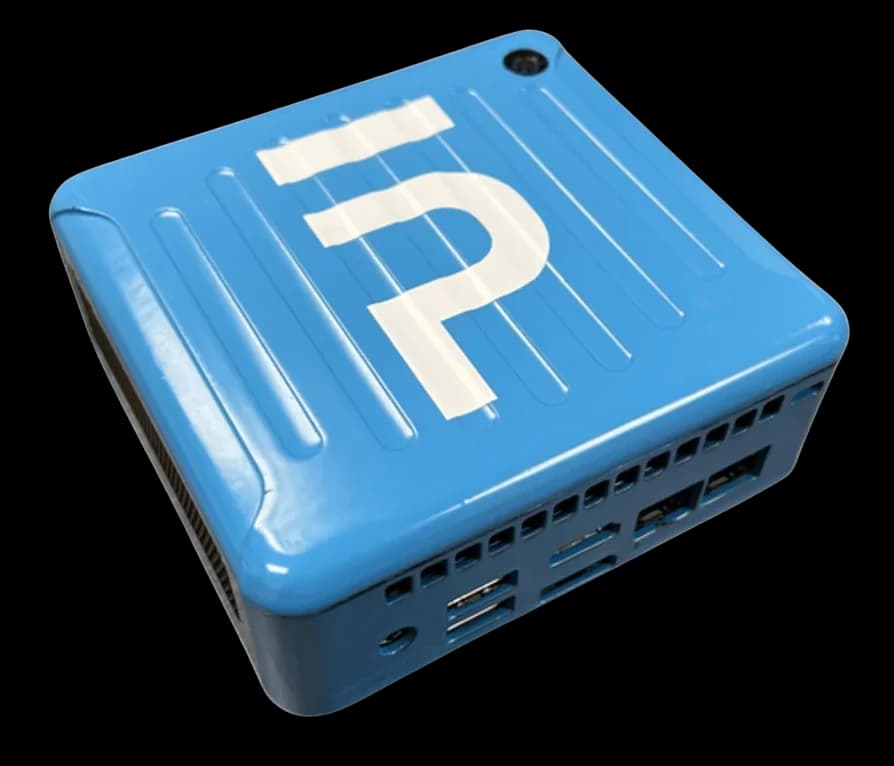
| Arcus 5G Core and Arcus 4G Core (Blue Arcus) | 5G SA or NSA, and a separate LTE core[3][26] | From a mini PC to a server cluster, on virtual machines or containers; control plane can sit in a public cloud[3] |
| Ataya Harmony | 5G core; 4G support not publicly stated[27] | On premises, in a data center or in the cloud[27][28] |
| Celona EdgeOS | EPC and 5G core on a shared data plane[29] | Celona Edge appliance, VMware ESXi, or cloud-delivered AerFlex, with Celona's own access points[29] |
| Cumucore 4G/5G Core | 4G EPC and 5G core[23] | Containers on bare metal, OpenStack or Kubernetes at your site, with or without internet access[23] |
| Druid Raemis | LTE, 5G NSA and 5G SA on one platform[2] | Virtual machines or containers[2] |
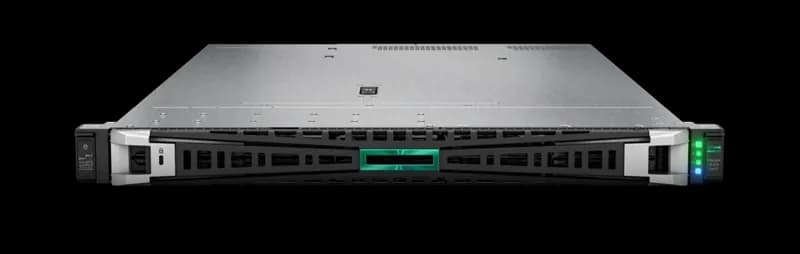
| HPE Aruba Networking Private 5G Core | 4G EPC and 5G core in one software product[4] | Virtual machines on VMware or Proxmox, as software only or preinstalled on HPE servers[4] |
| Highway 9 Mobile Cloud | 4G and 5G packet cores[14] | Cloud-hosted core services plus a Mobile Edge core on premises or in a public cloud[13][14] |
| Mavenir Small Footprint 5GC | 5G packet core, in a converged packet core portfolio[7] | On premises, public or private cloud[7] |
| Pente HyperCore | 2G to 5G SA and NSA in one core[30] | Cloud service with optional EdgeMini, EdgeMax or virtual edge cores on site[15][31] |
| Samsung Compact Core | 4G EPC, 5G NSA or 5G SA[6] | A single server, with the UPF included[6] |
| Tecore iCore | 5G SA and NSA, LTE, 3G and 2G on one platform[32] | On premises, in the cloud or at the edge[32] |
Some private network systems include a core that is not sold separately. Ericsson's dual-mode 4G/5G core runs on the two controllers that come with each Ericsson Private 5G site[5]. In Nokia's DAC system the on-premises MXIE server hosts the core functions[17]; Nokia classified the Enterprise Campus Edge business behind DAC as discontinued operations in July 2026 because it expects to sell it, and RCR Wireless News reported in September 2026 that the sale was expected to close by the end of the year[33][34]. See complete network systems and the vendor landscape.
EPC vs 5G Core: what each function does
Both cores do the same jobs with different building blocks. 3GPP (the 3rd Generation Partnership Project) defines the 4G EPC in TS 23.401 and the 5G Core in TS 23.501[9][10]. The 5G Core uses a service-based architecture, in which each network function offers its services to other authorized functions[1].
| Job | 4G EPC | 5G Core |
|---|---|---|
| Device registration, security and mobility | MME: NAS signalling and its security, tracking-area management, gateway selection[9] | AMF (Access and Mobility Management Function): registration, connection, reachability and mobility management; access authentication[10] |
| Data sessions and IP addresses | P-GW allocates device IP addresses; the MME selects the gateways[9] | SMF: session setup and release, device IP address allocation, UPF selection[10] |
| Carrying user traffic | S-GW (Serving Gateway) anchors traffic as devices move between base stations; P-GW connects to the external data network[9] | UPF: packet routing and forwarding, and the connection point to the data network[10] |
| Subscriber data and authentication | HSS, which the MME queries over the S6a interface for subscription and authentication data[9] | UDM generates authentication credentials and manages subscriber identities; AUSF authenticates devices[10] |
| Connection to the radios | S1-MME for control signalling and S1-U for user data[9] | N2 to the AMF for control signalling and N3 to the UPF for user data[10] |
Standalone or non-standalone 5G?
Non-standalone (NSA) 5G adds 5G NR (New Radio) radios to an existing LTE radio network and EPC, with the LTE base station acting as the master node in a dual-connectivity mode called EN-DC. Standalone (SA) 5G is a full 5G system that needs no part of a 4G network[1]. If you are starting fresh, check that your devices support SA. If you already run private LTE, a core that can operate as an EPC, an NSA core or an SA core lets you add 5G without replacing hardware, according to Samsung[6].
3GPP also uses "standalone" in a different sense: a standalone non-public network (SNPN) is a private network that does not rely on network functions provided by a public mobile network[10]. For the device and radio side of the LTE-or-5G decision, see private LTE vs private 5G.
On-premises, cloud or embedded in the radio
| Deployment | How vendors describe it | Questions to ask |
|---|---|---|
| Embedded in the radio or access point | Baicells' HaloB option moves the necessary LTE core functions into the base station[8]; Celona AerFlex keeps control in the cloud and breaks traffic out at each access point[11] | How many radios and devices can one embedded core serve? What changes when you add radios? |
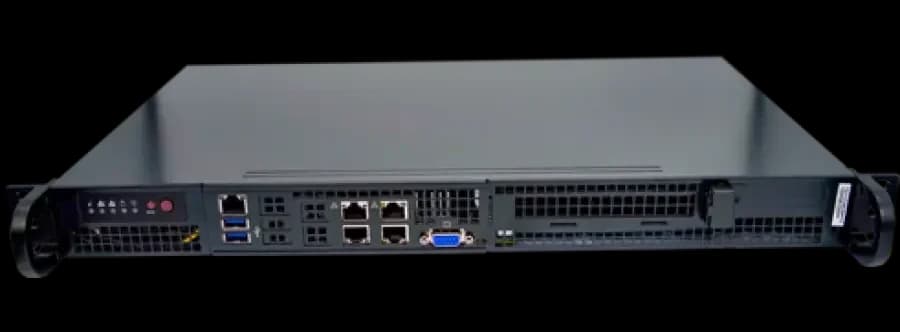
| On-site server or appliance | Samsung's Compact Core runs on a single server and includes the UPF[6]; HPE's M2000 core appliance is an HPE ProLiant DL325 Gen11[12]; Pente's EdgeMini is a mini PC rated by Pente for up to 500 active users[31] | Is there a second server for failover? Who patches the software? |
| Cloud control with an on-site user plane | Highway 9 splits its core into cloud-hosted Mobile Center services and a Mobile Edge packet core[13]; in Nokia's DAC design the cloud handles orchestration and monitoring while production traffic stays on site[17] | Which functions run where? What keeps working if the cloud link fails? |
| Virtual machines or containers on your own servers | Druid delivers Raemis as virtual machines or containers[2]; HPE recommends VMware or Proxmox[4]; Cumucore runs on bare metal, OpenStack or Kubernetes[23] | What server specification does the vendor support, and who maintains the hypervisor? |
A cloud-managed core does not have to send your data to the cloud. Ask every vendor the same question: which parts run where, and which traffic crosses which link. Many vendors sell the core together with radios and management; see complete network systems.
Open-source cores
Several open-source projects implement an EPC, a 5G core or both. They cost nothing to license, but you take on testing with your radios and devices, security updates and support yourself, or pay a company to do it.
| Project | What it implements | License and steward | Recent release |
|---|---|---|---|
| Open5GS | 5G core and EPC, written in C[35] | GNU Affero General Public License version 3[36]; NewPlane offers a commercial license and support[37] | v2.8.0, June 20, 2026, upgraded to 3GPP Release 19[38] |
| Aether SD-Core | Cloud-native core whose control plane supports 5G SA, 5G NSA and 4G at the same time[39] | Created by the Open Networking Foundation; a Linux Foundation project since February 2024[40]; the UPF code is under Apache 2.0[41] | UPF v2.6.3, September 24, 2026[42] |
| Magma | Converged packet core for 4G, 5G NSA and 5G SA[43] | BSD 3-Clause license[44]; Linux Foundation collaboration since February 2021[45] | v1.9.0, May 16, 2025[46] |
| free5GC | 5G core[47] | Linux Foundation project[47] | v4.3.0, September 30, 2026[48] |
| OpenAirInterface Core Network | 5G standalone core[49] | OAI's CSSL, a modified Apache 2.0 license; free of charge for non-commercial and academic research[50] | v2.2.1, April 13, 2026[51] |
Retired, sold and merged core offerings
- Microsoft Azure Private 5G Core ran 4G and 5G core functions on Azure Stack Edge hardware. Microsoft retired it on September 30, 2025 and pointed customers to partner solutions such as Nokia and Ericsson private wireless[52].
- AWS Private 5G was retired in May 2025; AWS still offers Integrated Private Wireless on AWS through telecom partners[53].
- Casa Systems' Axyom core was sold to Lumine Group, which completed the purchase on April 30, 2024 after Casa's Chapter 11 filing[54][55].
- Nokia's campus private wireless business, including the DAC and MXIE products, is expected to be sold; see above[33][34].
- Firecell and Accelleran, a French core vendor and a RAN software maker, announced a merger on February 18, 2026 to sell a pre-integrated core and RAN package[56].
If a vendor on your shortlist changes hands, ask who will supply software updates, security patches and support for the life of your network.
Common questions
Do I need a 5G core to run private 5G?
For standalone 5G, yes: SA is a full 5G system built on a 5G Core[1]. Non-standalone 5G runs 5G radios alongside LTE radios and an EPC instead[1]. Some products can run either way; Samsung says its Compact Core can operate as an EPC, an NSA core or an SA core[6].
Can I buy a core separately from the radios?
Yes. Druid, Blue Arcus, Amarisoft and HPE all document cores that work with other vendors' radios over standard interfaces[2][3][24][21]. Others, such as Ericsson, include the core only as part of their own system[5].
Can one core serve several sites?
Yes, if the vendor supports it. Ericsson, for example, offers multisite support in which several sites rely on a core at one central location[18]. Check where each site's user traffic is handled and what happens to a site if its link to the central core fails.
Does a cloud-managed core send my data to the cloud?
Not necessarily. Nokia's DAC PW/MXIE keeps the user plane on site and uses its cloud for orchestration and monitoring rather than production data[17], and Celona AerFlex breaks traffic out at each access point[11]. Other designs differ, so ask each vendor where the UPF runs.
How does the core decide which devices can join?
It checks each device's SIM credentials against its subscriber records in the HSS or UDM and authorizes access based on that subscription data[9][10]. In the U.S., CBRS (Citizens Broadband Radio Service) networks can use subscriber identities under the shared network code 315-010, issued in blocks of 100,000[57].
Sources
- 5G System Overview — 3GPP, Jan 10, 2023. Accessed Oct 1, 2026.
- Raemis Cellular Technology Platform — Druid Software. Accessed Oct 1, 2026.
- Arcus 5G Core datasheet (V.4.1, PDF) — Blue Arcus Technologies. Accessed Oct 1, 2026.
- HPE Aruba Networking Private 5G Core QuickSpecs (Version 8) — Hewlett Packard Enterprise, Jul 6, 2026. Accessed Oct 1, 2026.
- Controller and cellular core guide: Ericsson Private 5G networks — Ericsson, Jun 27, 2025. Accessed Oct 1, 2026.
- Compact Core — Samsung Networks. Accessed Oct 1, 2026.
- Converged Packet Core (Small Footprint 5GC and EPC) — Mavenir. Accessed Oct 1, 2026.
- Neutrino430 indoor base station — Baicells. Accessed Oct 1, 2026.
- 3GPP TS 23.401 version 19.6.0 (ETSI TS 123 401 V19.6.0, 2026-07): GPRS enhancements for E-UTRAN access — ETSI / 3GPP. Accessed Oct 1, 2026.
- 3GPP TS 23.501 version 19.8.0 (ETSI TS 123 501 V19.8.0, 2026-07): System architecture for the 5G System (5GS) — ETSI / 3GPP. Accessed Oct 1, 2026.
- Celona AerFlex — Celona. Accessed Oct 1, 2026.
- Private 5G: Components (TechDocs) — Hewlett Packard Enterprise, Aug 1, 2025. Accessed Oct 1, 2026.
- Highway 9 Mobile Cloud FAQs — Highway 9 Networks. Accessed Oct 1, 2026.
- Highway 9 Mobile Cloud Overview (PDF) — Highway 9 Networks. Accessed Oct 1, 2026.
- Pente Survivable Edge Technology — Pente Networks. Accessed Oct 1, 2026.
- GSA: Private Mobile Networks Continue to Scale — 3GPP (article by the Global mobile Suppliers Association), Mar 24, 2026. Accessed Oct 1, 2026.
- DAC PW/MXIE within OT ICS Environments: A Networking and Security Approach (white paper, v1.0) — Nokia, Jul 5, 2026. Accessed Oct 1, 2026.
- Ericsson Private 5G — Ericsson. Accessed Oct 1, 2026.
- Private 5G: Design (TechDocs) — Hewlett Packard Enterprise, Apr 30, 2025. Accessed Oct 1, 2026.
- Celona Orion platform overview — Celona. Accessed Oct 1, 2026.
- HPE Aruba Networking Private 5G — Hewlett Packard Enterprise. Accessed Oct 1, 2026.
- Pente Networks | Private 5G & Cloud Mobile Core Solutions — Pente Networks. Accessed Oct 1, 2026.
- The software to build a mobile private network — Cumucore. Accessed Oct 1, 2026.
- 4G/5G Public & Private Network Solutions — Amarisoft. Accessed Oct 1, 2026.
- Amarisoft — Amarisoft. Accessed Oct 1, 2026.
- Arcus 4G Core — Blue Arcus Technologies. Accessed Oct 1, 2026.
- Products - Ataya — Ataya. Accessed Oct 1, 2026.
- Ataya Edge — Ataya, Feb 25, 2026. Accessed Oct 1, 2026.
- Celona EdgeOS — Celona. Accessed Oct 1, 2026.
- Technology | Pente Networks — Pente Networks. Accessed Oct 1, 2026.
- Pente HyperCore Cloud EdgeMini — Pente Networks. Accessed Oct 1, 2026.
- iCore Network: Multi-Technology, All-In-One Core Network — Tecore Networks. Accessed Oct 1, 2026.
- Nokia provides recast comparative financial information reflecting the presentation of Fixed Wireless Access CPE and Enterprise Campus Edge businesses as discontinued operations — Nokia, Jul 23, 2026. Accessed Oct 1, 2026.
- Nokia hints at new campus-AI strategy, raises questions about its old campus-5G one — RCR Wireless News, Sep 10, 2026. Accessed Oct 1, 2026.
- Open5GS features — Open5GS project. Accessed Oct 1, 2026.
- open5gs/open5gs LICENSE (GNU AGPL v3) — GitHub (Open5GS). Accessed Oct 1, 2026.
- Open5GS support — Open5GS project. Accessed Oct 1, 2026.
- v2.8.0 - Upgrade to Release 19 — Open5GS project, Jun 20, 2026. Accessed Oct 1, 2026.
- SD-Core — Aether Project (Linux Foundation). Accessed Oct 1, 2026.
- Aether Project — Aether Project (Linux Foundation). Accessed Oct 1, 2026.
- omec-project/upf: 4G/5G user plane function — GitHub (omec-project). Accessed Oct 1, 2026.
- omec-project/upf release v2.6.3 — GitHub (omec-project), Sep 24, 2026. Accessed Oct 1, 2026.
- Magma — Magma (Linux Foundation). Accessed Oct 1, 2026.
- magma/magma LICENSE (BSD 3-Clause) — GitHub (Magma). Accessed Oct 1, 2026.
- Linux Foundation Launches Industry Collaboration with Magma to Accelerate Deployment of Wireless Networks — Linux Foundation, Feb 3, 2021. Accessed Oct 1, 2026.
- Magma v1.9.0 release — GitHub (Magma), May 16, 2025. Accessed Oct 1, 2026.
- free5GC — free5GC (Linux Foundation). Accessed Oct 1, 2026.
- free5GC release history — free5GC (Linux Foundation), Sep 30, 2026. Accessed Oct 1, 2026.
- OAI Core Network — OpenAirInterface Software Alliance. Accessed Oct 1, 2026.
- OAI License Model — OpenAirInterface Software Alliance. Accessed Oct 1, 2026.
- oai-cn5g-fed release v2.2.1 — OpenAirInterface (EURECOM GitLab), Apr 13, 2026. Accessed Oct 1, 2026.
- What is Azure Private 5G Core? — Microsoft Learn, Jan 13, 2025. Accessed Oct 1, 2026.
- AWS no longer offering private 5G, cedes field to established industry players and carriers — Network World, May 22, 2025. Accessed Oct 1, 2026.
- Lumine Group Completes the Purchase of Casa Systems' Axyom Cloud Native 5G Core Software & RAN Assets — Lumine Group, Apr 30, 2024. Accessed Oct 1, 2026.
- Casa Systems Files for Bankruptcy, Sells Off Cable Tech, 5G Core and RAN Assets — Next TV, Apr 3, 2024. Accessed Oct 1, 2026.
- Firecell and Accelleran Merge to Launch a Full-Stack Private 5G Platform — Firecell, Feb 18, 2026. Accessed Oct 1, 2026.
- IMSI Assignment and Management Guidelines for Shared HNI for CBRS Range (Version 2, July 2020) — ATIS IMSI Oversight Council. Accessed Oct 1, 2026.
Product facts on this page come from each product’s record and its cited sources.